


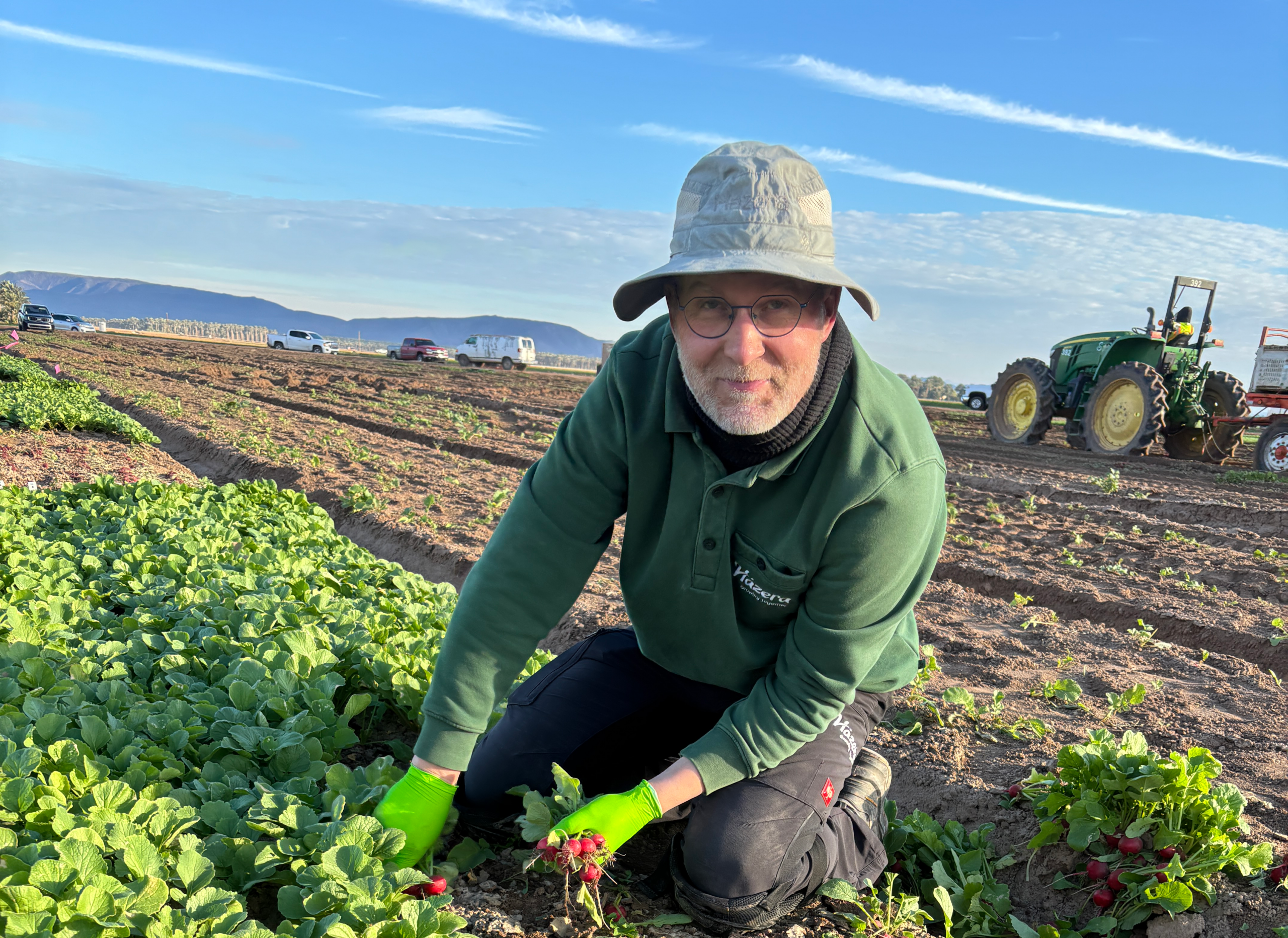
At Hazera, we are proud of our dedicated team, working passionately to provide growers with strong and reliable varieties. While our products are often in the spotlight, it is the people behind them who make the difference. This time, we shine the spotlight on André van Andel, radish breeder at Hazera.
André started at Hazera on 1 December 1992 as an assistant breeder. Since then, he has built his career around one crop: radish. “I have actually always worked in radish, and I have really grown into it completely — with a lot of pleasure, by the way,” he says.
His interest in breeding started in his teen years. André did not grow up in an agricultural family, but through holiday work and biology and genetics lessons at school, his curiosity grew. When a vacancy in breeding came along, he immediately knew: “This is what I want to become.”
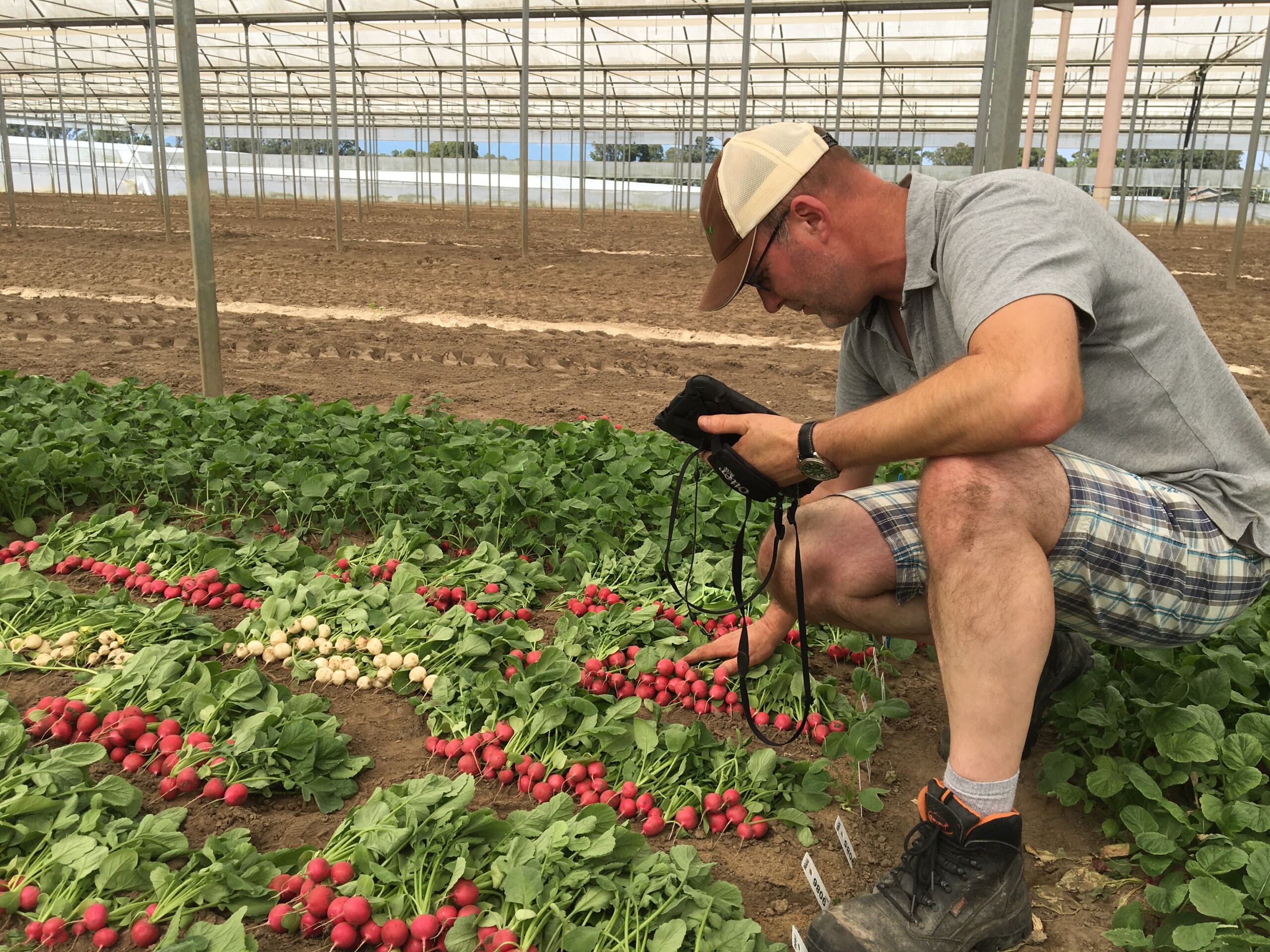
Today, André leads the radish breeding programme. “It is simply a beautiful profession,” he explains. “It is a bit of calculation, thinking through genetics, and a very practical part: assessing crops in the field, being outside and being with growers. Actually, it is the ideal combination.”
Outside work, André enjoys spending much of his time with his family and his church community. His faith gives him meaning and purpose in life, and also guides him in his work. He is married to Saskia and they have three adult children.
If you had to explain your job to a 5-year-old, how would you do it?
André laughs, because this is a question he has had to answer before for his own children. Together with his wife Saskia, he once found a simple way to explain his job: a plant doctor.
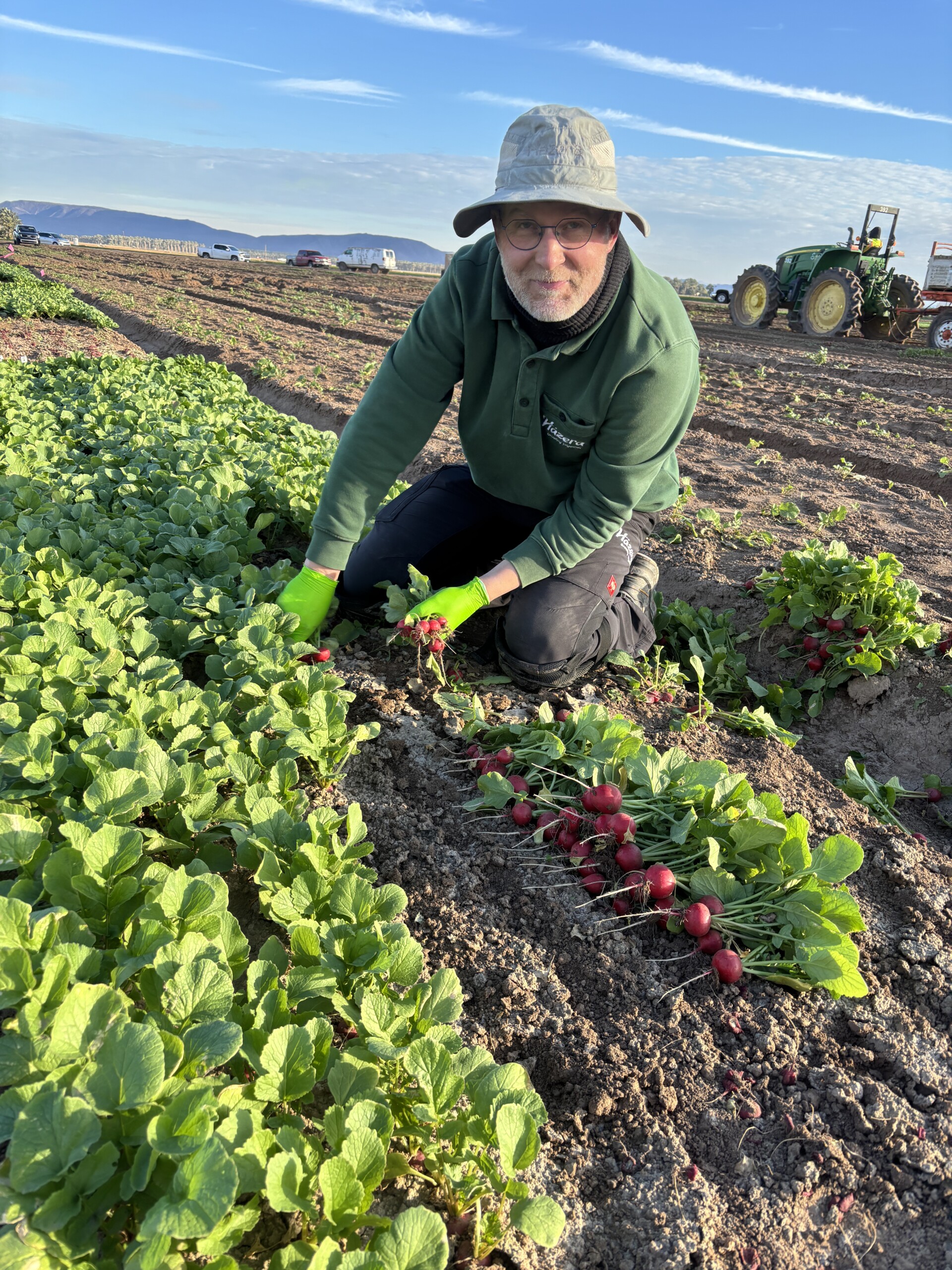
“A doctor, of course, makes people better when they are ill. But a doctor also tries to make people stronger. That is what a breeder actually does. He tries to make the crop stronger, better and of better quality.”
Of course, crossing plants is more complicated, but for children André keeps it visual and simple. He explains it with flowers, pollen and seeds: pollen from one plant goes to another plant, seeds grow, and from those seeds a new plant appears. For him, this also shows how important it is to explain agriculture to the next generation. Nowadays, many children do not know where their food comes from.
What have you learned from working with colleagues and partners from different cultures?
For André, the most important lesson is listening carefully. Working across countries and cultures means communication is not always the same everywhere. Some people are very direct, while in other cultures you need to listen more carefully to understand what is really meant. “You have to try to listen to the message behind the message,” André says. “Try to treat people with respect.”
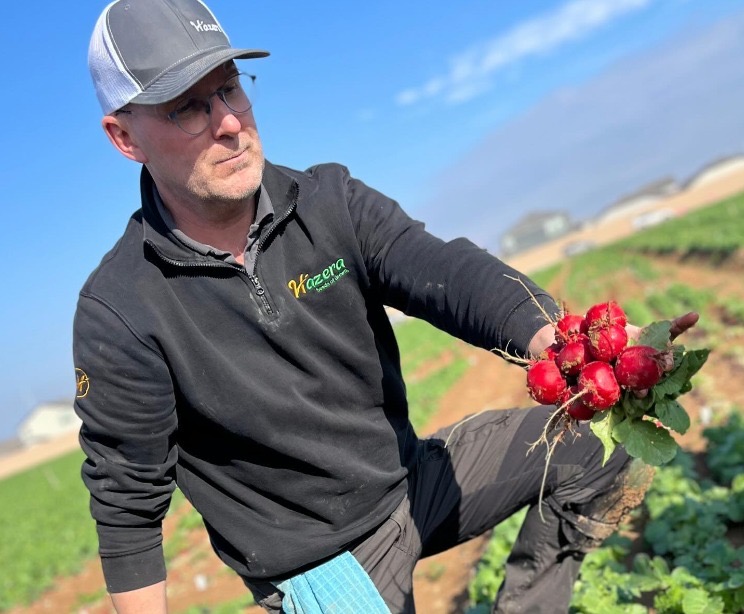
When visiting growers abroad, he likes to ask what they think radish should look like in ten years. This gives growers space to share what really matters to them, instead of André filling in the answer himself.
“I try to connect with people,” he says. “With one person, that starts with a chat about everyday things, and with another, you go straight into business.” That connection fits strongly with Hazera’s Growing Together mindset: by listening, respecting different perspectives and working closely with others, we can continue to grow together.
What is a memorable moment from your career?
André has several milestones that stand out. One important moment took place around the year 2000, when the radish breeding programme was still mainly focused on the Dutch market. Through an international Limagrain research meeting, André came into contact with a colleague from the United States who was working on a small radish programme.
That meeting opened the door to trials in America. “When I was there, a whole new world opened up for me,” André recalls. He saw large-scale outdoor cultivation and a different way of looking at radish quality. One important insight was the focus on internal quality. At that time, the Dutch market mainly focused on external appearance, while the American market challenged him to look deeper at what happens inside the radish. That became an important anchor point in his breeding programme.
He also remembers the discovery of Hazera’s winter variety Autella. At the time, Hazera was not strongly present in the winter segment. André remembers seeing the variety and thinking: “This is going to be the one.”
Another memorable discovery was Melito, found during a very wet trial on Ascension Day. The field was soaked, but this material did not crack and showed strong internal quality.
For André, collaboration within Limagrain has played an important role. It helped Hazera strengthen its position in the American market and continues to keep teams sharp today. “The sum of two is even more than what one can do,” he says.
If you could look ahead 10 years, what would excite you most?
When thinking about the future, André first mentions something he hopes will never disappear: people with real crop knowledge. “We need people with green fingers who know what they are talking about,” he says. “People who do not only want to do computer work, but who also really want to be in the field, observe clearly and understand the crop.”
At the same time, technology will continue to play a bigger role. André sees great value in DNA technology, markers and digital phenotyping, which can help speed up the breeding process and improve efficiency.
In radish, he believes the future will mainly be about refinement: adding resistances, improving yield, increasing reliability and supporting more efficient production. Mechanisation is also an important focus, especially for outdoor production.
Innovation in types and colours remains part of the future as well. Hazera already has some varieties in the pipeline. “Something new is coming soon,” André announces.
Do you want to stay connected with our Hazera people?
Follow us on our social media channels to stay connected with our Hazera people! If you have any questions left, don’t hesitate to ask them via our contact page.


